19 Front Yard Fence Ideas That Actually Meet HOA Height Rules

Most cities cap a front yard fence at 3 to 4 feet, not the 6-foot privacy fence people picture when they start planning. That single rule catches more homeowners off guard than any style decision ever will, and it’s worth sorting out before you fall in love with a design that a permit office will never approve.
The good news is that a shorter fence actually suits a front yard better anyway, it defines the property line and adds real curb appeal without cutting off the street view or making the house feel walled in.
Get the height, the sightline rules near your driveway, and the right material sorted first, then the style choice becomes the easy, fun part. Below are 19 front yard fence ideas built around exactly that order, along with the gate details and real linear-foot pricing most guides skip.
Front Yard Fence Material Selector
| Material | Style Fit | Maintenance | Cost per Linear Ft |
|---|---|---|---|
| Wood (Cedar/Pine) | Classic, farmhouse | Restain every 3–5 years | $12–$25 |
| Hog Wire & Wood Frame | Farmhouse, dog-friendly | Low | $15–$28 |
| Wrought Iron / Aluminum | Classic, estate | Low, occasional rust check | $25–$45 |
| Vinyl / Composite | Modern, classic | Zero rot, occasional wash | $20–$35 |
| Stone / Masonry | Classic, estate | Very low | $70–$150 |
1. Classic White Picket Fence
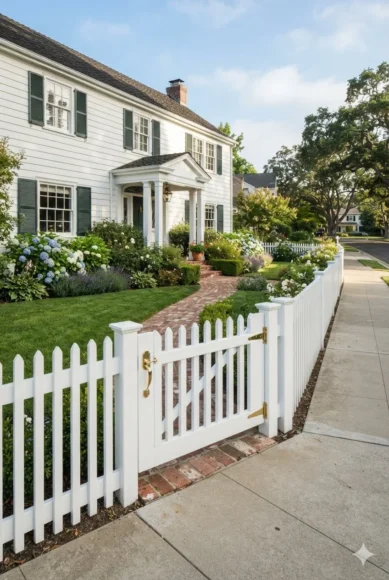
The Curb Appeal Vibe: A timeless white picket line adds a charming, welcoming feel that suits traditional and colonial homes better than almost any other style.
Zoning & Height Rule: Standard picket height runs 3 to 4 feet, squarely within most municipal front yard limits without needing a variance.
Styling Detail: Choose a vinyl version if you’d rather skip repainting, wood needs fresh paint or stain every 3 to 5 years to stay crisp.
2. Modern Horizontal Cedar Slat Fence
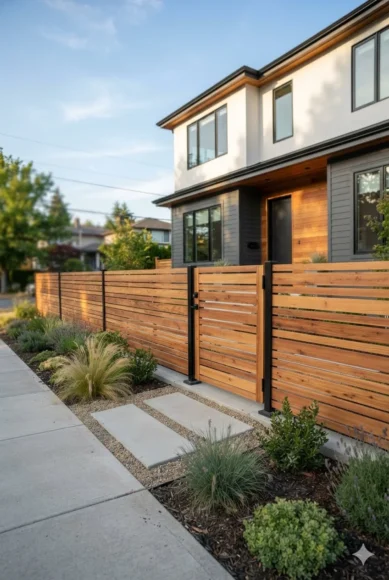
The Curb Appeal Vibe: Horizontal cedar slats bring a sleek, contemporary edge that reads as intentional design rather than a boundary barrier.
Zoning & Height Rule: Keep the slat run at 3 to 4 feet for front yard placement, taller horizontal designs are typically reserved for side and rear yards where privacy fencing is allowed.
Styling Detail: Space slats with a slight gap rather than flush, it keeps the modern look from feeling like a solid wall.
The Front Yard Height & Setback Formula
3. Black Aluminum Panel Fence
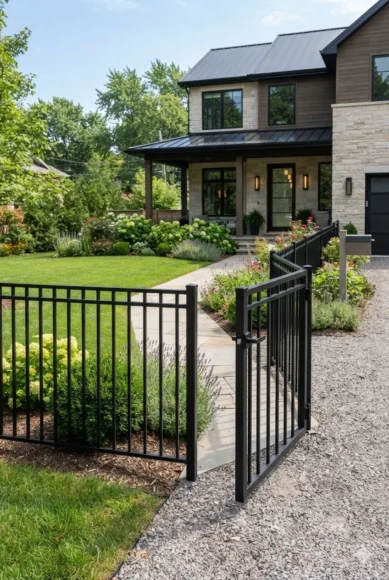
The Curb Appeal Vibe: Matte black aluminum panels give a crisp, modern boundary that reads as premium without the upkeep of real wrought iron.
Zoning & Height Rule: Aluminum’s open picket-style spacing usually passes visibility triangle rules even near driveways, since sightlines pass through the gaps.
Styling Detail: Powder-coated aluminum never rusts the way real iron eventually does, worth the small premium over raw steel.
4. French Gothic Spear Iron Fence
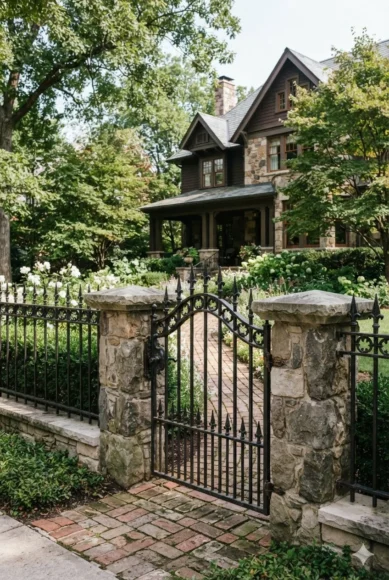
The Curb Appeal Vibe: Pointed spear-top pickets bring old-world, estate-style elegance to colonial and craftsman homes alike.
Zoning & Height Rule: Decorative spear tops sometimes get measured to their highest point by inspectors, confirm whether your local code measures to the rail or the spear tip before finalizing height.
Styling Detail: Pair with stone pillars at the gate posts for a genuinely estate-level finish.
5. Split-Rail Fence with Wire Backing
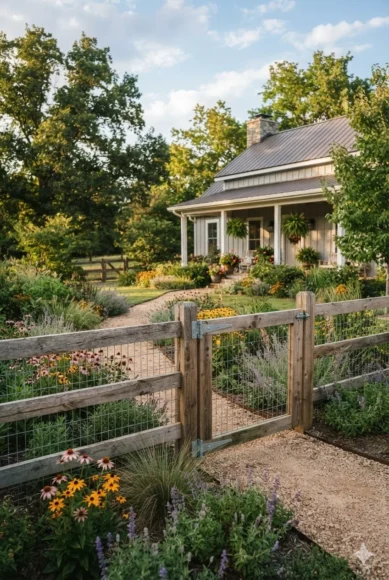
The Curb Appeal Vibe: Rustic split-rail posts with hog wire mesh behind them keep the open, countryside look while actually containing a dog, something plain split-rail alone can’t do.
Zoning & Height Rule: This style is nearly always well under the 3 to 4 foot cap, one of the easiest designs to get approved without any variance request.
Styling Detail: Choose galvanized wire mesh over standard steel, it resists rust in wet climates far longer.
6. Post-and-Board Farmhouse Fence
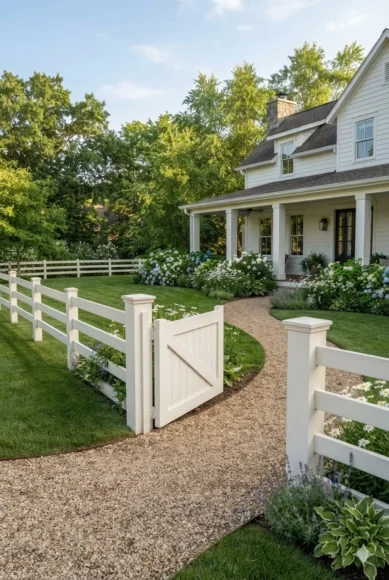
The Curb Appeal Vibe: Wide horizontal boards on sturdy posts create a genuine farmhouse boundary that suits larger front yards with a more open, welcoming feel.
Zoning & Height Rule: Keep board spacing loose enough that the fence reads as open rather than solid, some municipalities classify a fully solid board fence differently than a spaced one.
Styling Detail: Match the post style to your porch posts for a cohesive look, our how to wrap porch posts guide covers matching wood detailing on the house itself.
7. Stone-and-Iron Combo Fence
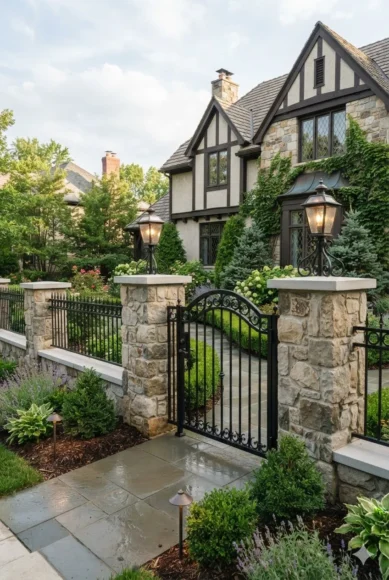
The Curb Appeal Vibe: Stone pillars anchoring iron picket sections between them give a fence real weight and permanence without going fully solid.
Zoning & Height Rule: Measure the stone pillar height separately from the iron infill, some codes cap solid masonry lower than open picket sections even on the same fence line.
Styling Detail: Cap pillars with a contrasting stone or concrete top for a finished, architectural look.
8. Vinyl Picket Fence
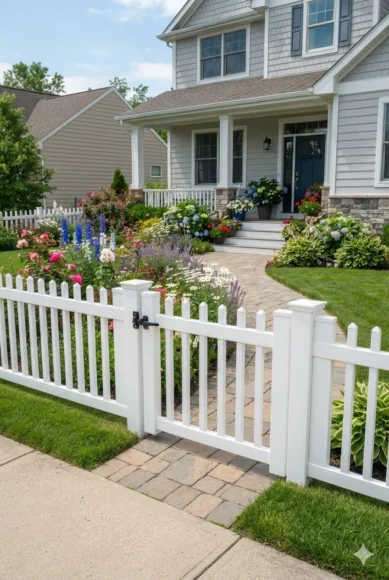
The Curb Appeal Vibe: A vinyl picket fence gives the traditional picket look with none of the repainting, a practical pick for a busy household.
Zoning & Height Rule: Standard vinyl picket kits are manufactured at 3 and 4 foot heights specifically to match common code limits, check the box before buying rather than after installing.
Styling Detail: Vinyl resists fading better in high-UV climates than painted wood, worth the upfront cost difference in sunny regions.
Front Yard Gate & Entry Checklist
9. Steel Cable Rail Fence
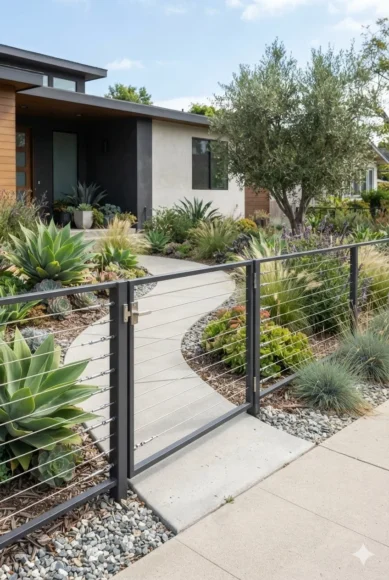
The Curb Appeal Vibe: Thin horizontal steel cables strung between minimal posts create an almost invisible boundary, ideal for homes that want definition without visually blocking the yard at all.
Zoning & Height Rule: This style almost always clears both the height cap and the sightline rule easily, the open cable design rarely triggers a visibility concern.
Styling Detail: Use stainless steel cable specifically, standard steel cable rusts and stains the surrounding posts within a couple of seasons.
10. Laser-Cut Metal Panel Fence
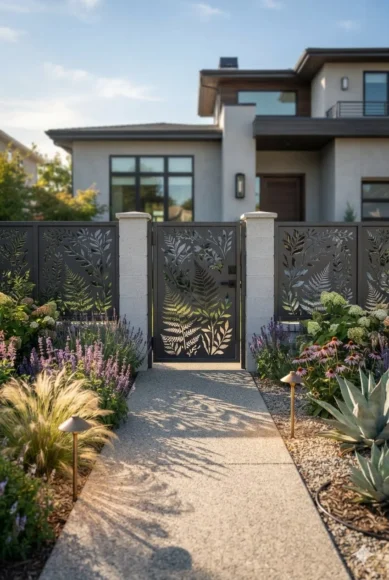
The Curb Appeal Vibe: Custom laser-cut patterns in metal panels add genuine personality and artistry, a real statement piece rather than a standard boundary.
Zoning & Height Rule: Solid-appearing panels with small cutout patterns are sometimes classified as solid fencing by code even though they’re visually open, confirm classification with your local permitting office before ordering custom panels.
Styling Detail: A powder-coat finish protects the intricate cutwork from rust far longer than raw steel.
11. Corrugated Metal Insert Fence
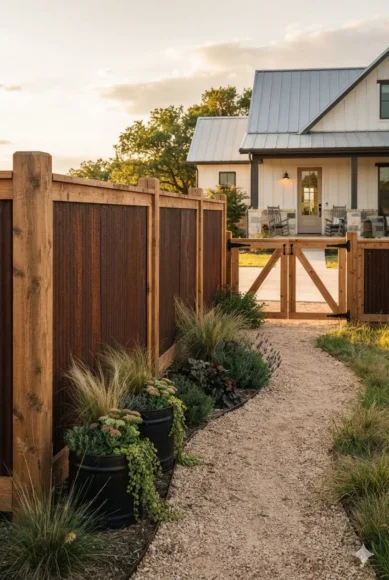
The Curb Appeal Vibe: Corrugated metal panels set into a wood frame bring genuine farmhouse-industrial texture, a distinctive look that’s still fairly rare on most streets.
Zoning & Height Rule: Treat corrugated panel sections as solid fencing for code purposes, they block sightlines completely and should stay well under the height cap.
Styling Detail: A weathered or Corten-style finish ages into a rich patina rather than looking dated the way raw galvanized metal can.
12. Reclaimed Wood Fence
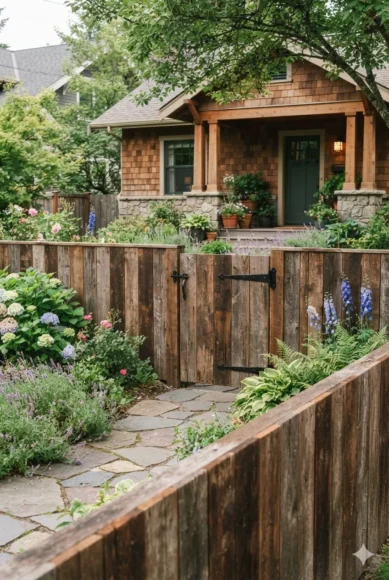
The Curb Appeal Vibe: Weathered boards sourced from old barns or factories bring genuine history and character that new lumber simply can’t replicate.
Zoning & Height Rule: Reclaimed board widths vary piece to piece, plan the layout with a consistent top line even if individual board heights differ slightly, this keeps the overall fence within code height.
Styling Detail: Seal reclaimed wood with a clear exterior sealant to lock in the weathered look without letting it degrade further.
13. Whitewashed Wood Fence
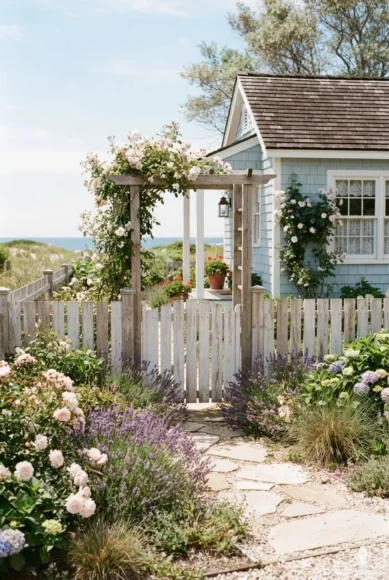
The Curb Appeal Vibe: A light, weathered whitewash finish brings an easy coastal or cottage feel, casual and inviting rather than crisp and formal.
Zoning & Height Rule: Standard picket or board height rules apply here the same as any wood fence, whitewash is a finish choice, not a structural one.
Styling Detail: Use a breathable whitewash stain rather than solid paint, it lets the wood grain show through for a more authentic weathered look.
14. Decorative Wrought Iron with Lattice Top
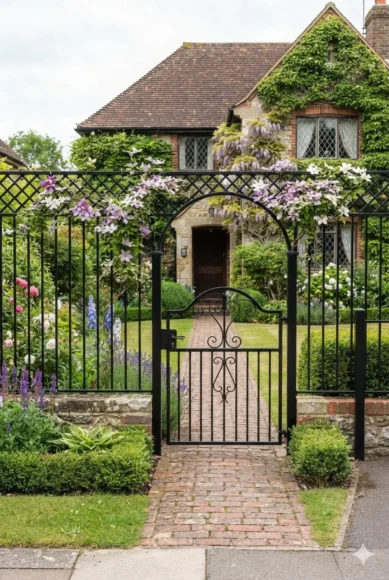
The Curb Appeal Vibe: A sturdy iron base topped with a lattice section balances real security with a decorative touch, the lattice also gives climbing plants something to hold onto.
Zoning & Height Rule: Plan for the lattice growth over time, a climbing vine can visually thicken the fence enough to affect sightline compliance at driveway corners.
Styling Detail: Choose a fast-blooming but manageable climber like clematis rather than an aggressive grower like wisteria for a front yard application.
15. Living Hedge Hybrid Fence
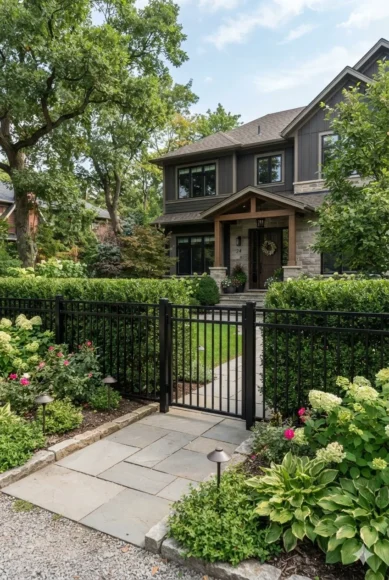
The Curb Appeal Vibe: A low structural fence backed or fronted by a dense hedge blends built and natural boundaries, giving privacy without a single solid wall in sight.
Zoning & Height Rule: Many municipalities regulate hedge height the same way as fencing, confirm before planting a hedge that will eventually grow past the 3 to 4 foot line.
Styling Detail: If you’re also transitioning to a fully covered sitting area near the entry, our how to screen in a porch guide covers that next layer of privacy.
16. Gabion Rock Basket Fence
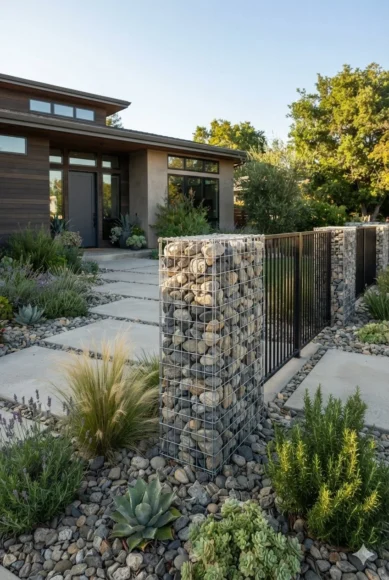
The Curb Appeal Vibe: Wire cages packed with stone create a genuinely modern, textural boundary that pairs naturally with contemporary landscaping.
Zoning & Height Rule: Gabion baskets are heavy and typically built low, 2 to 3 feet, which comfortably clears most front yard height limits.
Styling Detail: Match the stone fill to any existing rock landscaping nearby, our front yard landscaping ideas with rocks guide has more on coordinating stone tones across the yard.
17. Bamboo Privacy Screen
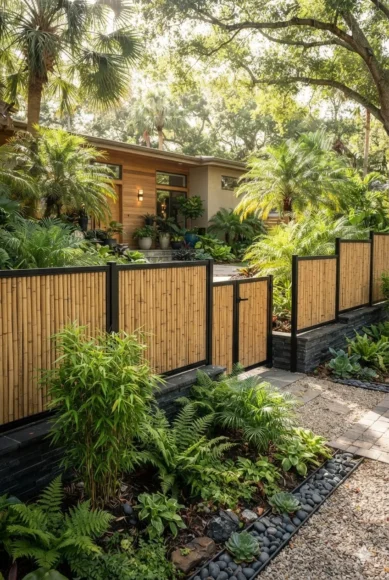
The Curb Appeal Vibe: Tall bamboo stalks bring a natural, eco-friendly green wall that suits tropical, coastal, or Asian-inspired landscaping particularly well.
Zoning & Height Rule: Live bamboo grows well past any front yard height limit, plan on regular trimming to keep it code-compliant, or choose a bamboo-panel screen product instead of living stalks for a fixed height.
Styling Detail: Install a root barrier if planting live bamboo, running varieties spread aggressively beyond the planting bed.
18. Low Boxwood Hedge Fence
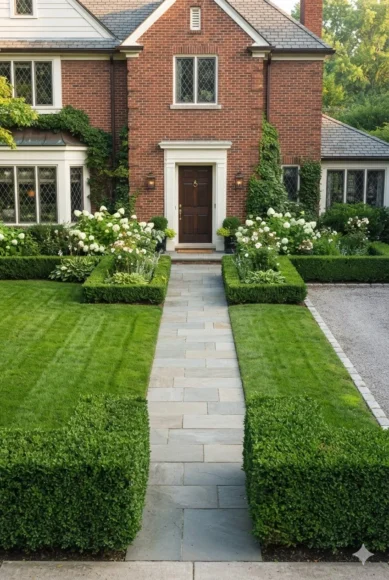
The Curb Appeal Vibe: Dense, compact boxwood creates a neat, well-groomed green line that defines the yard without blocking the view of the house entirely.
Zoning & Height Rule: Keep boxwood trimmed to 24 to 30 inches for the cleanest look and to comfortably clear sightline requirements at any corner.
Styling Detail: Plant in a straight, evenly spaced line and trim to a consistent height, uneven boxwood reads unkempt fast.
19. Vertical Garden Fence
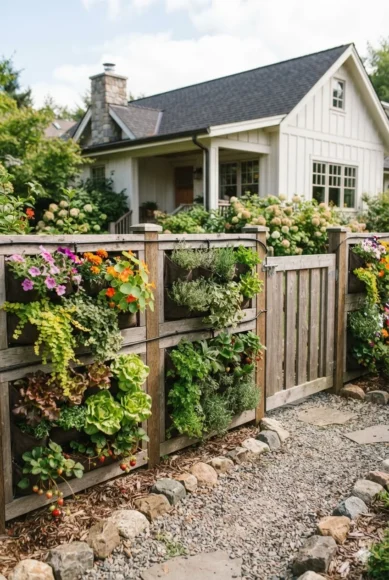
The Curb Appeal Vibe: A structural fence fitted with planting pockets turns the boundary itself into a growing space for flowers, herbs, or small vegetables.
Zoning & Height Rule: Build the structural frame within standard height limits, the planting pockets themselves add minimal height beyond the frame.
Styling Detail: Choose a drip irrigation line built into the fence structure, hand-watering a vertical garden this size gets old fast.
Cost per Linear Foot Comparison
| Fence Style | Cost per Linear Ft | Maintenance |
|---|---|---|
| Classic White Picket | $15–$28 | Repaint every 3–5 yrs (wood) |
| Modern Horizontal Cedar Slat | $18–$32 | Restain every 3–5 yrs |
| Black Aluminum Panel | $25–$40 | Very low |
| French Gothic Spear Iron | $30–$50 | Low, rust checks |
| Split-Rail with Wire Backing | $14–$26 | Low |
| Post-and-Board Farmhouse | $14–$25 | Restain every 3–5 yrs |
| Stone-and-Iron Combo | $70–$150 | Very low |
| Vinyl Picket | $20–$35 | Occasional wash only |
| Steel Cable Rail | $22–$38 | Very low, stainless only |
| Laser-Cut Metal Panel | $35–$60 | Low |
| Corrugated Metal Insert | $20–$38 | Low |
| Reclaimed Wood | $18–$35 | Reseal every 3–5 yrs |
| Whitewashed Wood | $14–$26 | Refresh whitewash every 3–4 yrs |
| Wrought Iron with Lattice | $28–$48 | Low, plus hedge trimming |
| Living Hedge Hybrid | $10–$22 | Seasonal trimming |
| Gabion Rock Basket | $30–$55 | Very low |
| Bamboo Privacy Screen | $12–$25 | Regular trimming, root control |
| Low Boxwood Hedge | $8–$18 | Seasonal trimming |
| Vertical Garden Fence | $25–$45 | Regular watering, seasonal care |
Frequently Asked Questions
What is the legal height limit for a front yard fence?
Most cities and HOAs cap front yard fences at 3 to 4 feet, 36 to 48 inches. Side and rear yards typically allow up to 6 feet. Always confirm your specific local ordinance before building, since limits vary by city and even by neighborhood HOA.
What is the sidewalk setback rule for fences?
Most municipalities require fences to sit a set distance back from the public sidewalk or property line, often 6 to 12 inches, and enforce a lower height limit inside the visibility triangle near driveways and corners so drivers and pedestrians can see each other clearly.
What is the lowest-maintenance fence material?
Vinyl, aluminum, and stone require the least upkeep, no staining, sealing, or rust treatment needed beyond an occasional rinse. Wood requires the most, needing a fresh stain or paint coat every 3 to 5 years to hold up against weather.
Final Thoughts
A front yard fence works best when the style choice comes after the legal groundwork, not before. Confirm your local height limit and sightline rules first, pick a material that matches your home’s architecture and how much upkeep you’re willing to do, and finish the entry with a gate that’s genuinely easy to use.
Get those basics right, and any of these 19 styles will boost curb appeal for years without a surprise call from code enforcement.