17 Low Ceiling Living Room Ideas: The Height-Illusion Playbook

A low ceiling turns into a real problem the moment you make the two most common mistakes, hanging a big pendant that eats up the little vertical space you have, and mounting curtain rods right above the window frame so the wall reads shorter than it is.
Neither mistake is obvious until you’re standing in the finished room wondering why it still feels boxed in.
Below are 17 low ceiling living room ideas built around the actual optical tricks that add visual height, the lighting clearances that keep fixtures from crowding the ceiling, and the paint and furniture choices that make a standard 8-foot room feel taller without touching the structure at all.
Do’s & Don’ts Cheat-Sheet
1. Light and Neutral Wall Colors
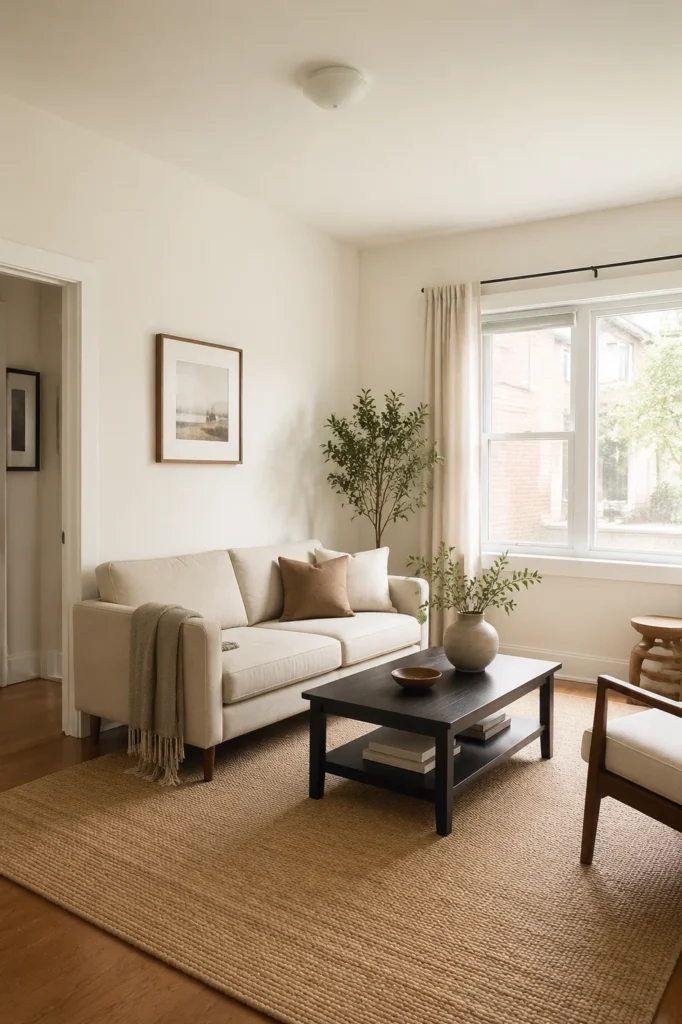
The Illusion: Soft whites, creams, and light greiges reflect natural light and read as farther away than dark colors, which visually pull walls inward.
Installation Tip: Choose a warm-undertone white over a stark cool white, warm whites feel more inviting and less clinical in a room already working with limited height.
Styling Detail: Keep walls and ceiling in similar shades to blur the line between them.
2. Curtains Hung High and Wide
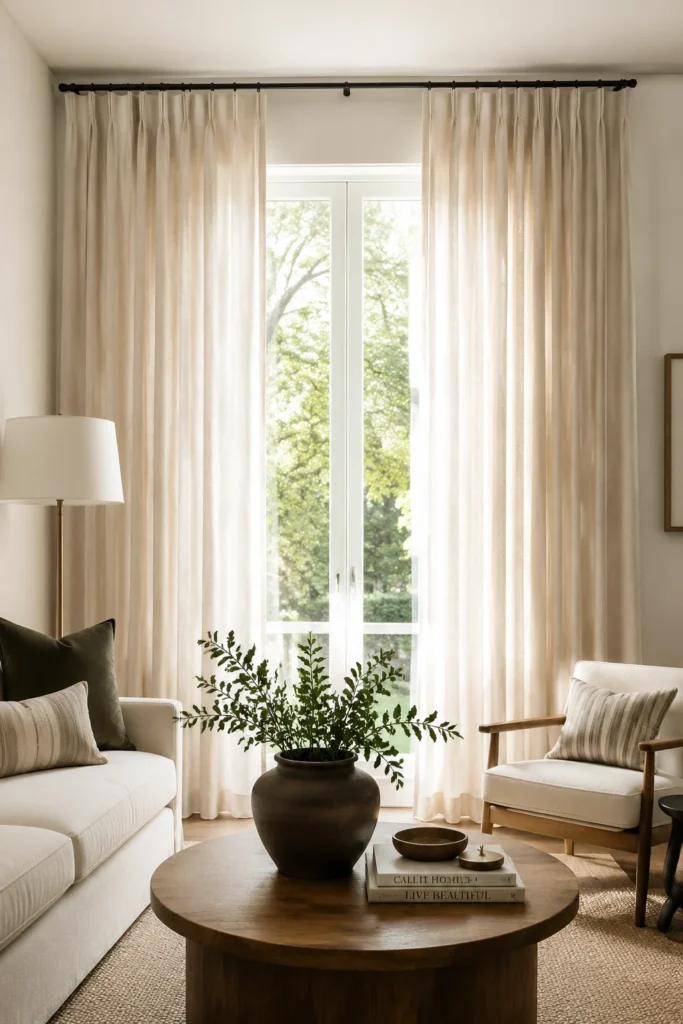
The Illusion: Mounting curtain rods close to the ceiling rather than at the window frame elongates the wall and makes the whole room read taller.
Installation Tip: Hang the rod just 1 to 2 inches below the ceiling line, and let the curtain panels run all the way to the floor. This is the single most common curtain mistake in low-ceiling rooms, mounting the rod right above the window frame, which visibly shortens the wall.
Styling Detail: Vertical pleats in the fabric reinforce the upward pull even further, since the eye follows the fold lines straight up.
Lighting Clearance Guide
| Ceiling Height | Max Fixture Drop | Best Fixture Type |
|---|---|---|
| 7 ft | 0–2 inches | Flush mount only |
| 8 ft (standard) | 2–4 inches | Semi-flush mount, slim recessed LED |
| 9 ft+ | 4–8 inches | Semi-flush, small pendant acceptable |
3. Vertical Stripes for Visual Height
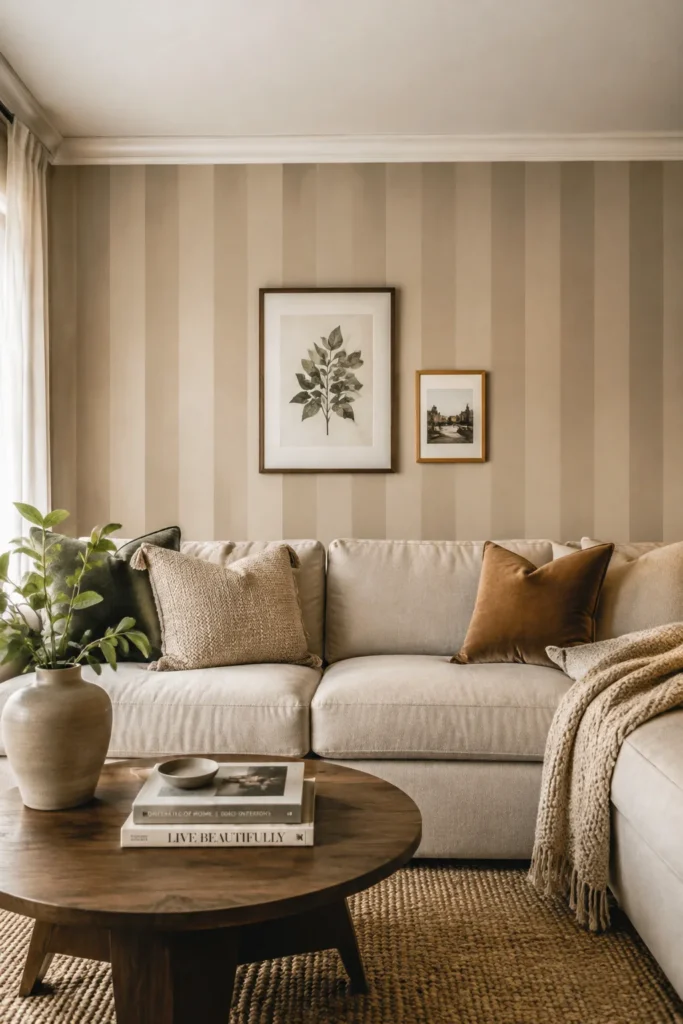
The Illusion: Vertical stripes on a wall or in wallpaper naturally pull the eye upward, adding real dimension and perceived height.
Installation Tip: Keep stripe width between 3 and 6 inches and the contrast subtle, two close tones rather than stark black and white, bold high-contrast stripes can overwhelm a low room instead of lifting it.
Styling Detail: This trick works especially well behind a sofa or on a single accent wall rather than the whole room.
4. Ceiling Painted One Shade Lighter
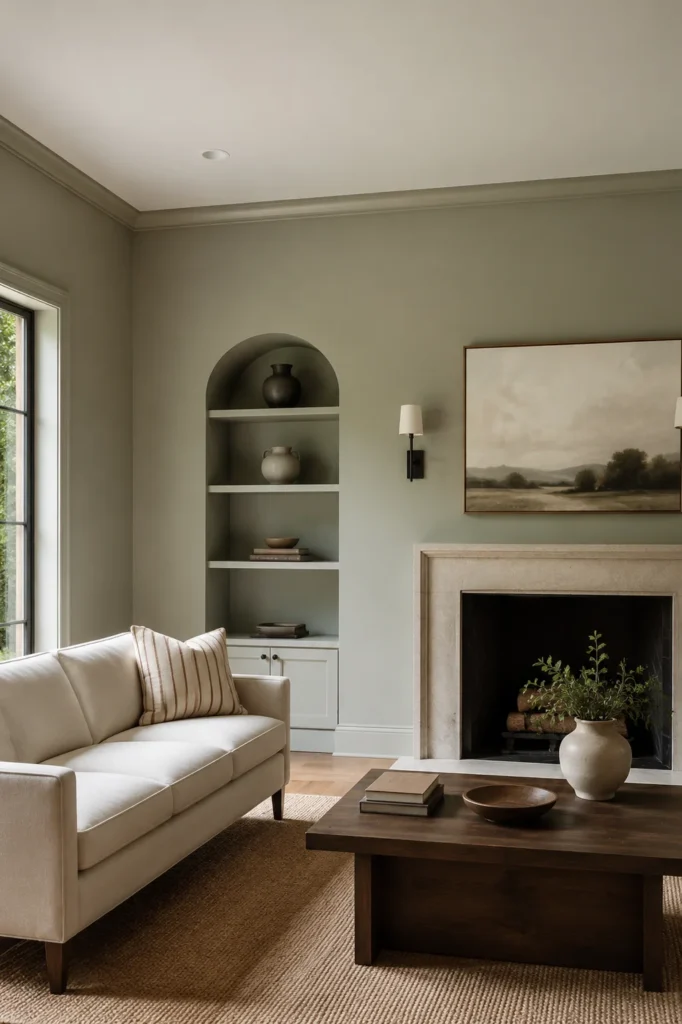
The Illusion: A ceiling just slightly lighter than the walls draws the eye upward through subtle contrast, tricking the brain into perceiving more height than is actually there.
Installation Tip: Pick your wall color first, then choose one shade lighter on the same paint strip for the ceiling.
Styling Detail: Avoid heavy or dark ceiling colors entirely, they compress a low room fast.
The Color & Paint Formula
5. Mirrors to Reflect Light
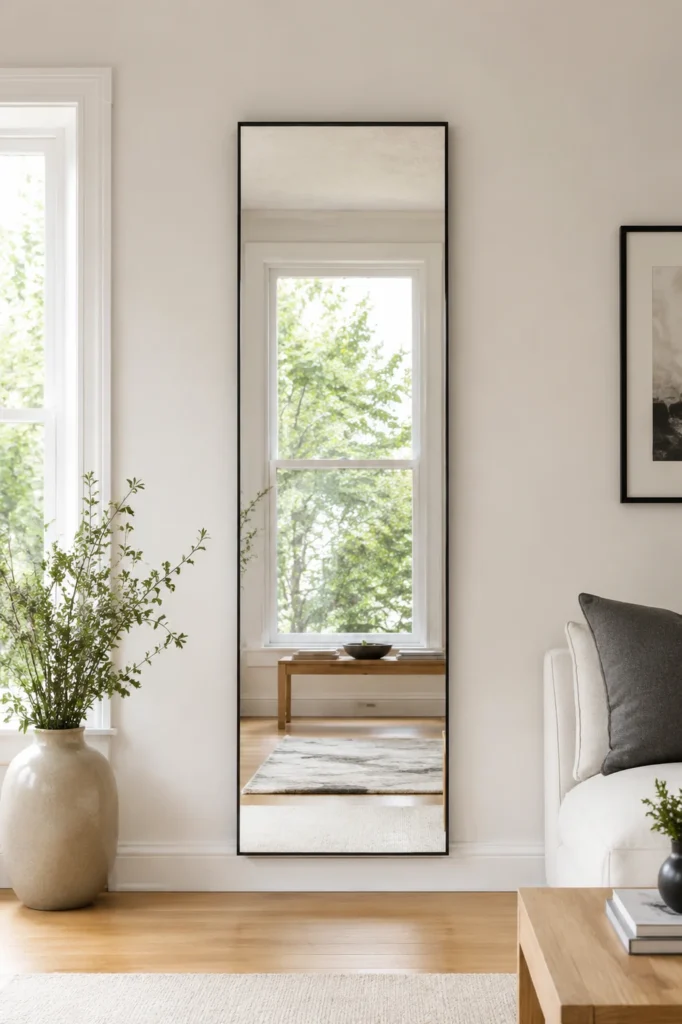
The Illusion: A large mirror bounces light around the room and doubles the visual depth of whatever it reflects, making the space feel larger and brighter.
Installation Tip: Place the mirror directly opposite a window, this position captures and redistributes the most usable daylight.
Styling Detail: A tall, narrow mirror reinforces the vertical height illusion more than a wide horizontal one.
6. Recessed or Flush Ceiling Lighting
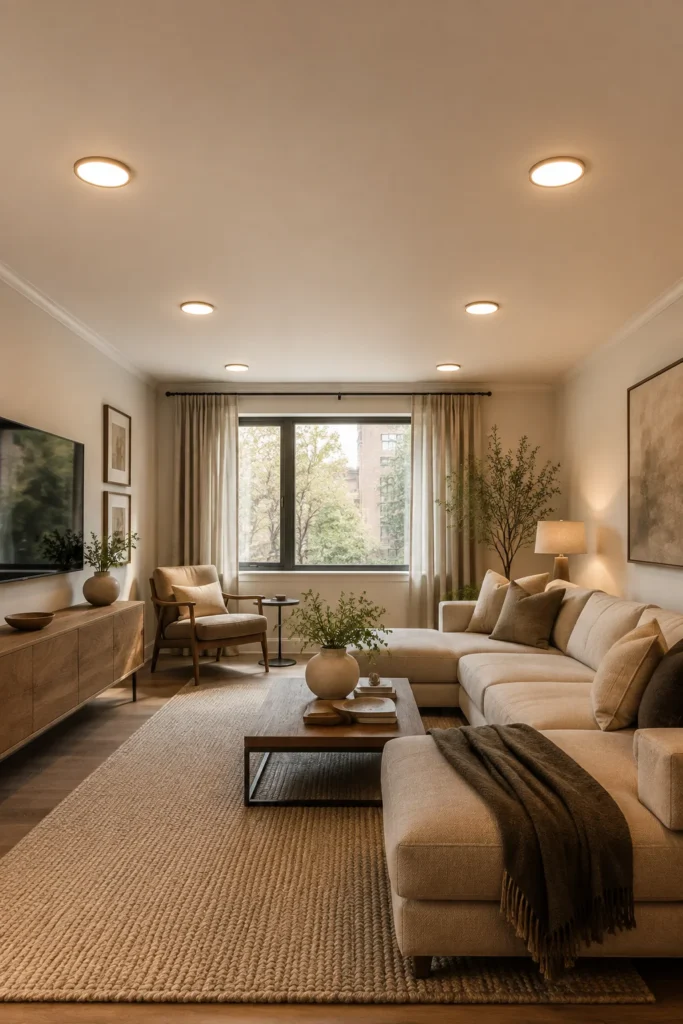
The Illusion: Slim flush-mount or recessed lighting delivers ample brightness without a bulky fixture eating into the room’s limited vertical space.
Installation Tip: Follow the lighting clearance guide above for your exact ceiling height, and stick to warm 2700K bulbs so the light feels inviting rather than clinical. Our vanity lighting over mirror ideas guide has more on choosing the right warm color temperature.
Styling Detail: Space recessed cans evenly, roughly 4 to 6 feet apart, to avoid uneven pools of light and shadow.
7. Minimal, Clean Decor
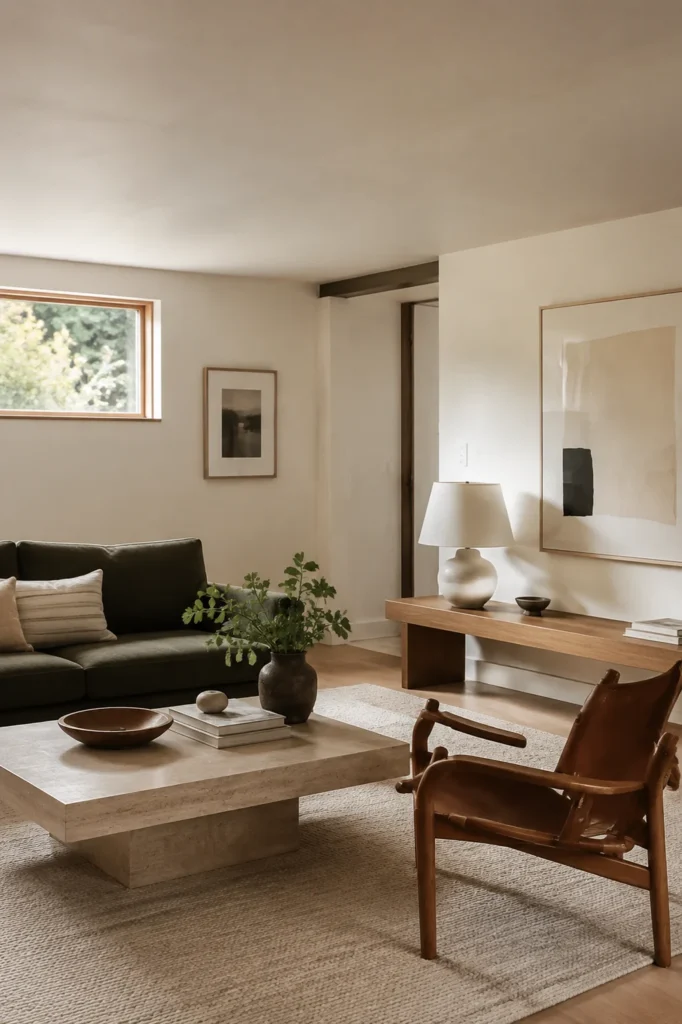
The Illusion: Clutter adds visual weight that makes a low room feel even smaller, a few well-chosen statement pieces do more than a shelf full of small objects.
Installation Tip: Edit surfaces down to a handful of items per shelf or table, leaving visible empty space between each one.
Styling Detail: Clean, uncluttered surfaces keep the eye moving through the room instead of stopping at every small object.
8. Simple, Smooth Ceiling
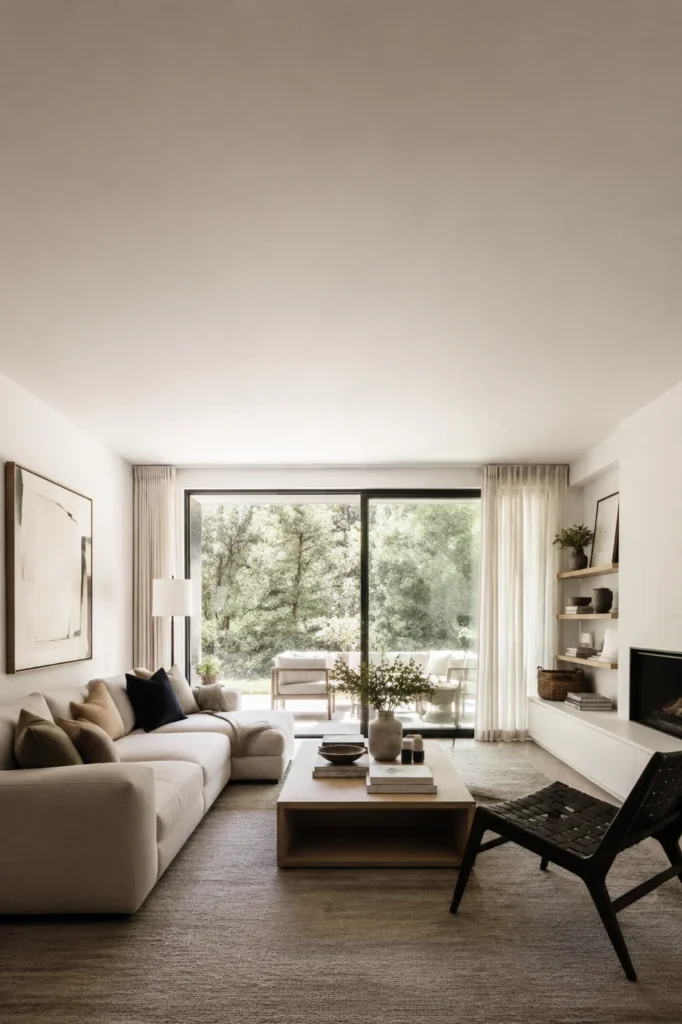
The Illusion: A clean, smooth ceiling surface feels lighter than one with heavy beams or busy texture, which visually lower and compress a room that’s already short on height.
Installation Tip: If your ceiling already has popcorn texture or old beams, a smooth skim coat is worth the investment before doing any other update on this list.
Styling Detail: Skip decorative molding on the ceiling itself, save architectural detail for the walls instead.
9. Floor-to-Ceiling Vertical Fluted Slat Accent Wall
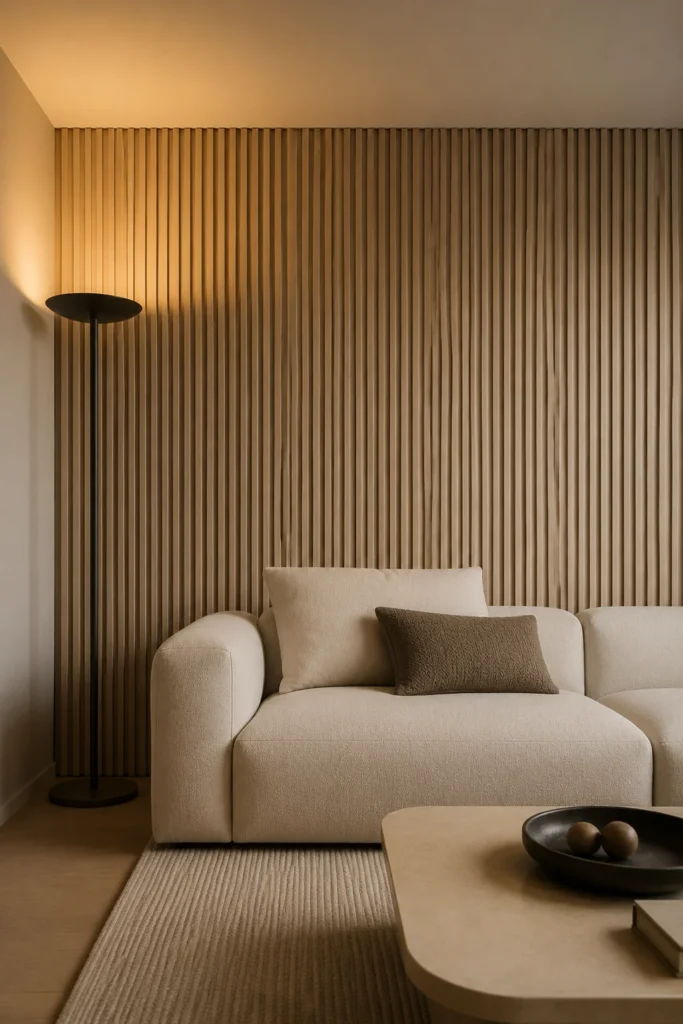
The Illusion: Slim vertical wood slats running straight from the baseboard to the ceiling draw the eye upward, instantly creating the feeling of an extra foot of height.
Installation Tip: Paint the wall behind the slats the exact same color as the ceiling to erase harsh horizontal dividing lines. Our bedroom background ideas guide covers slat wall sizing and installation in more depth.
Styling Detail: Pair with a low-profile cream sofa and an uplight floor lamp tucked in the corner.
10. Rugs That Define Space Without Clutter
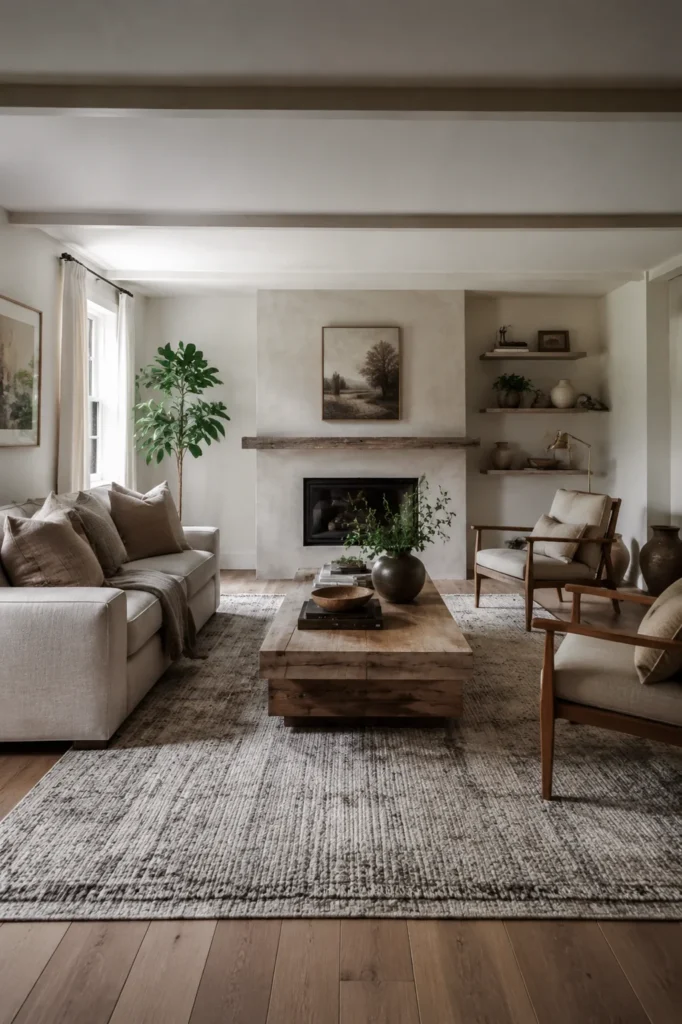
The Illusion: A well-placed rug grounds the furniture arrangement without adding visual bulk the way a bulky area divider or extra furniture piece would.
Installation Tip: Choose a simple pattern or subtle texture, a busy rug pattern competes with the ceiling-height tricks happening above it.
Styling Detail: Size the rug so all furniture legs sit on it, a too-small rug floating in the middle of the room reads awkward.
11. Tall, Slim Floor Lamps
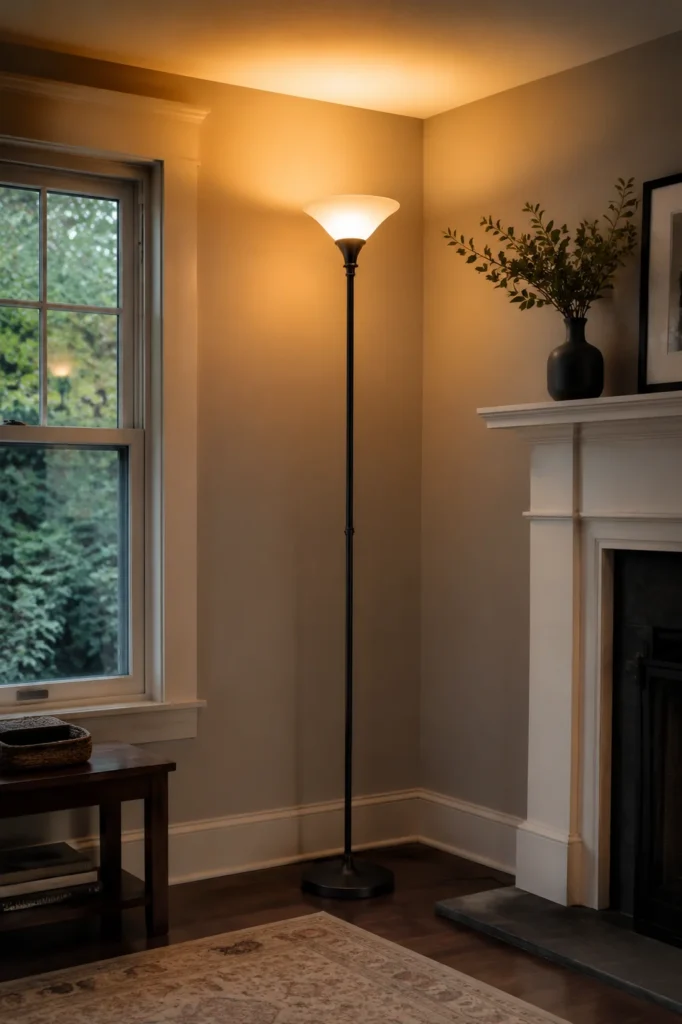
The Illusion: A tall, slender floor lamp emphasizes vertical space and keeps tabletops clear, its upward reach helps balance the room’s proportions.
Installation Tip: Choose an uplighting-style shade that throws light toward the ceiling rather than down, this reflective glow visually raises the whole room.
Styling Detail: Tuck one into a corner near the vertical slat wall or shelving for the strongest combined effect.
12. Light and Airy Window Treatments
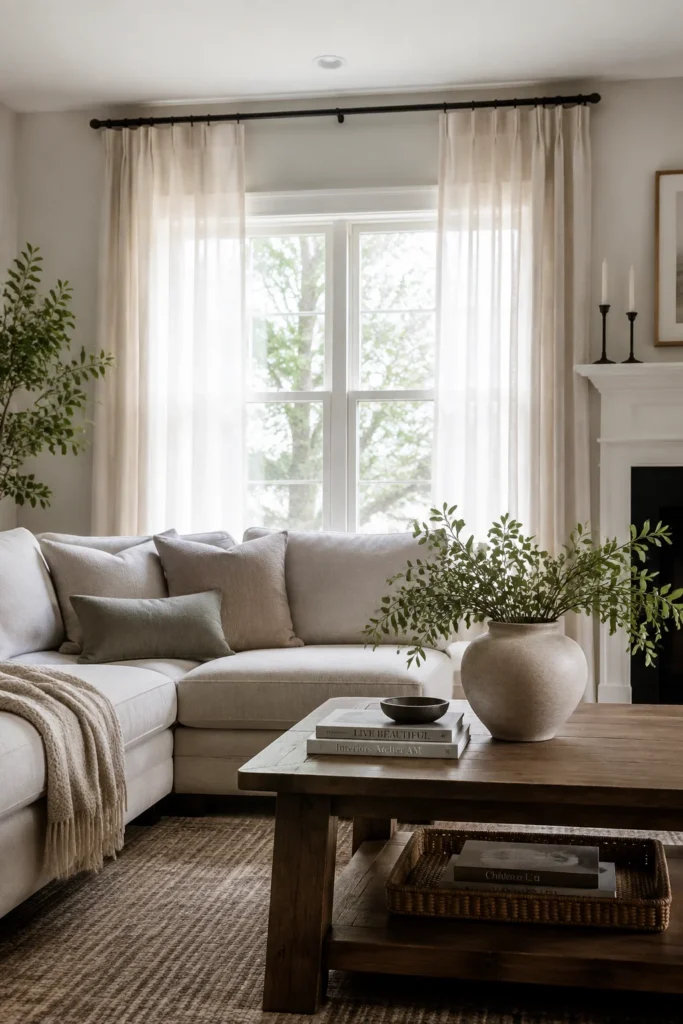
The Illusion: Sheer or lightweight curtains let more light pass through than heavy drapes, and more light in the room reads as more open space.
Installation Tip: Choose linen or voile over velvet or heavy blackout fabric for the main living room curtains, save heavier fabric for bedrooms where light control matters more.
Styling Detail: Combine with the high-and-wide hanging rule above for the full effect.
13. Built-In Furniture
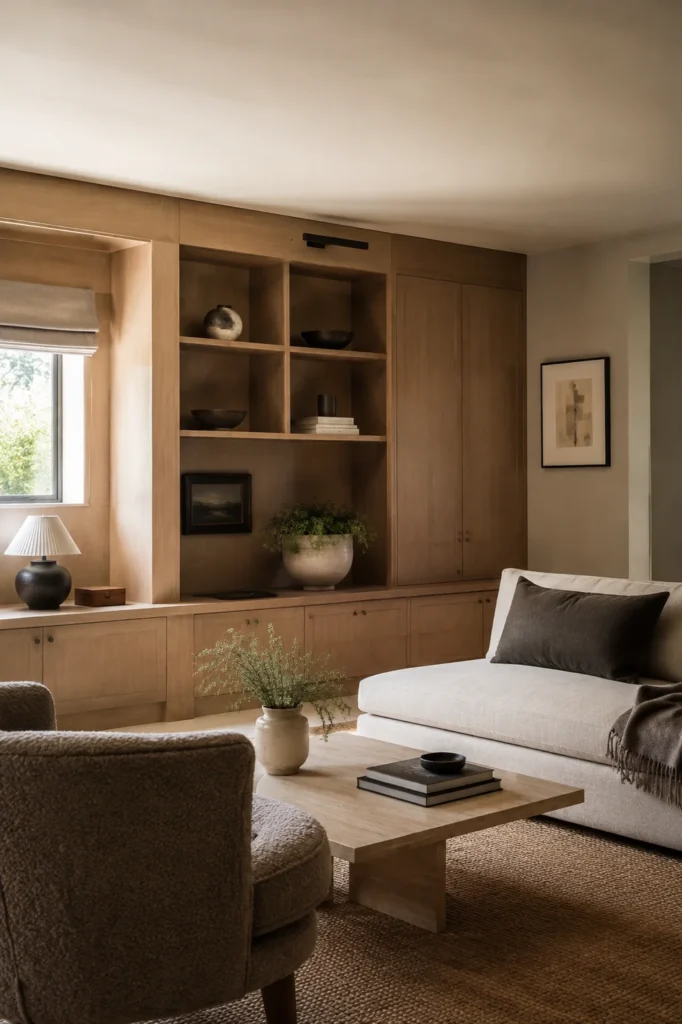
The Illusion: Built-ins blend into the wall and create a streamlined look that maximizes storage without adding the visual bulk of freestanding furniture.
Installation Tip: This is a bigger project best handled by a contractor or millwork specialist for a truly seamless, wall-flush finish.
Styling Detail: Our wood makeup vanity ideas guide has more on choosing wood tones that suit a built-in unit like this.
14. Furniture with Visible Legs
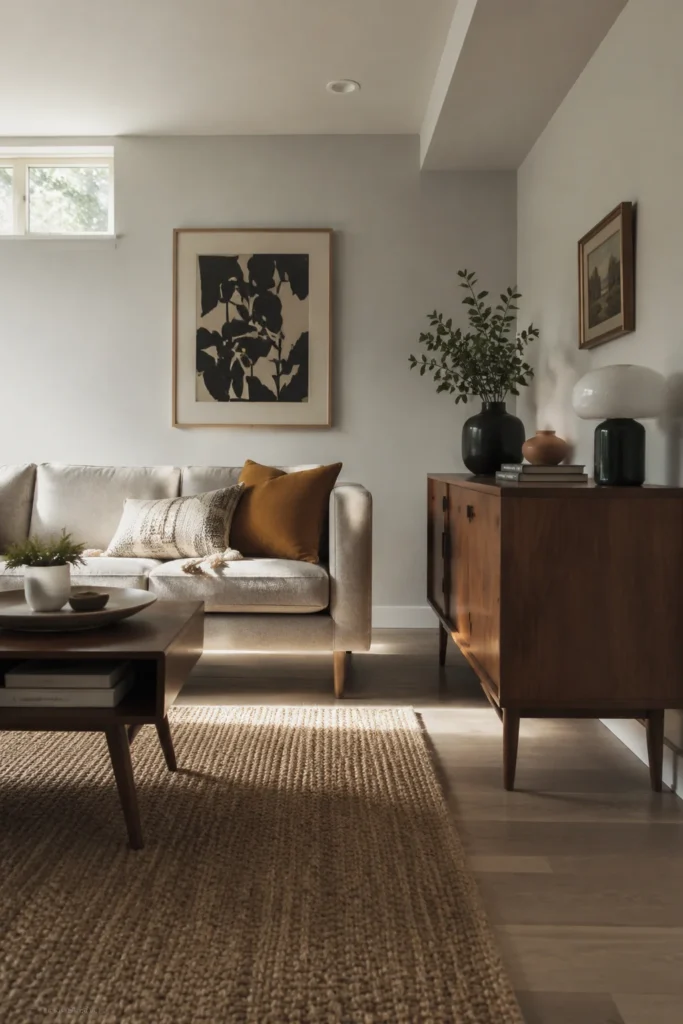
The Illusion: Furniture with exposed legs lets light and floor pass underneath, creating a genuine sense of openness that skirted or boxy pieces block entirely.
Installation Tip: Look for a visible gap of at least 4 to 6 inches under sofas and cabinets, that’s enough to read as real light passing through rather than a token detail.
Styling Detail: Avoid heavy, skirted furniture that sits flush with the floor, it visually anchors and weighs the room down.
15. Subtle Ceiling-Edge LED Strip Lighting
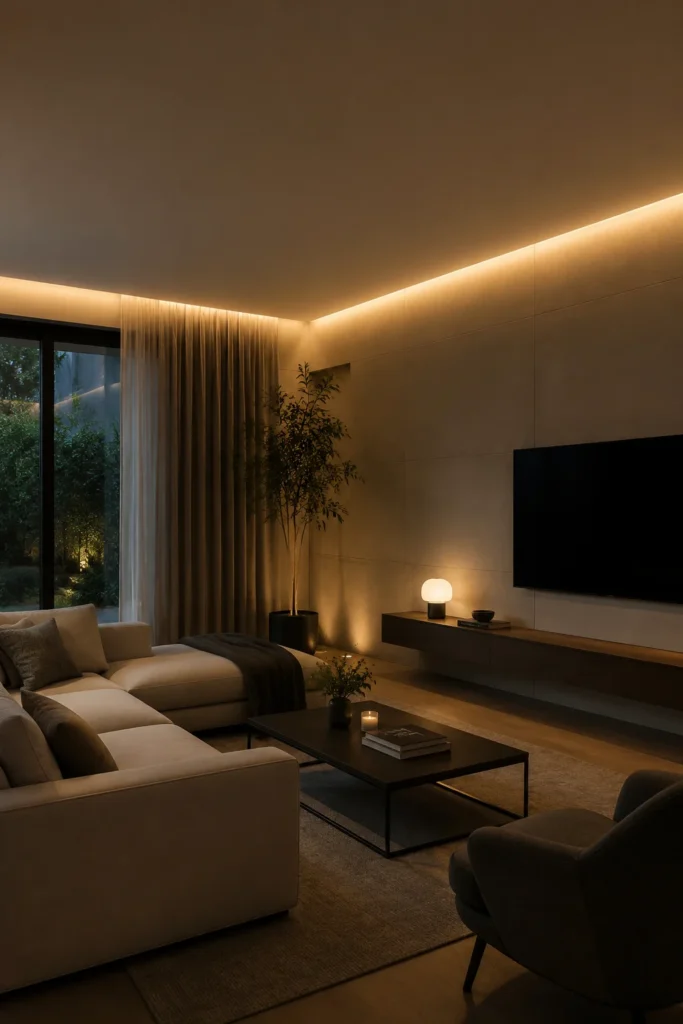
The Illusion: A soft LED strip run along the ceiling edge creates a floating effect that visually lifts the entire ceiling plane.
Installation Tip: Use warm 2700K to 3000K strips and keep the brightness subtle, this is meant as ambient uplighting, not the room’s main light source. Our entryway light fixture ideas for low ceilings guide has more low-clearance lighting options in this same style.
Styling Detail: Hide the strip behind a small trim lip so only the glow is visible, not the fixture itself.
16. Strategic Furniture Placement
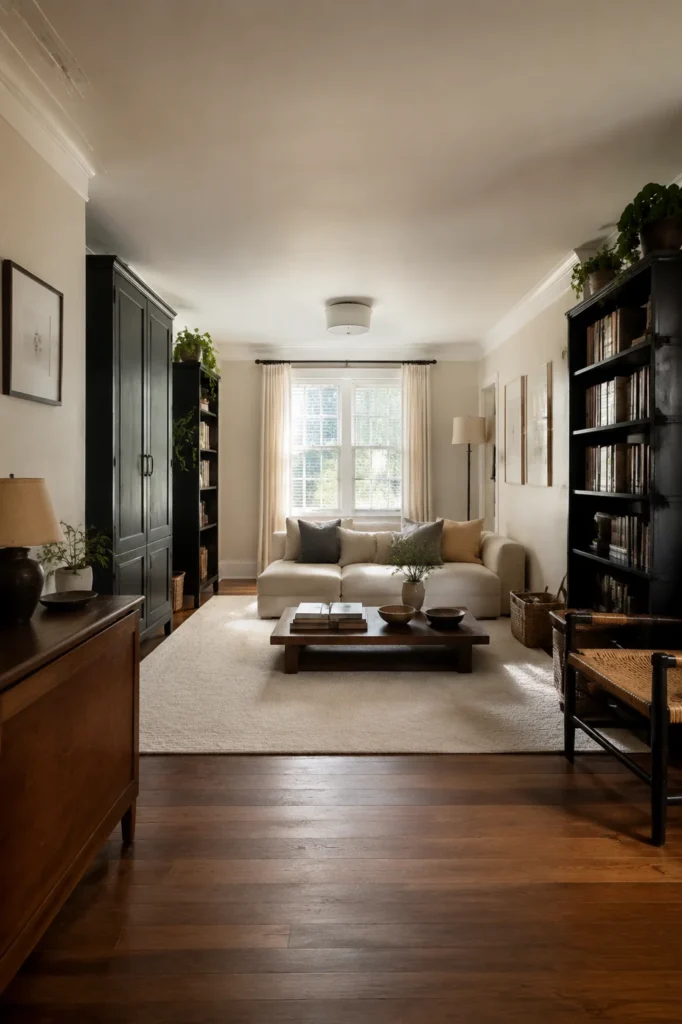
The Illusion: Keeping tall furniture pieces along the walls rather than in the center of the room maintains open sightlines that make the whole space feel bigger.
Installation Tip: Walk the main path through the room and confirm nothing tall interrupts the direct sightline from the entry to the far wall.
Styling Detail: Reserve the room’s visual center for low furniture only, coffee tables, ottomans, low seating.
17. Proportional Scale Throughout
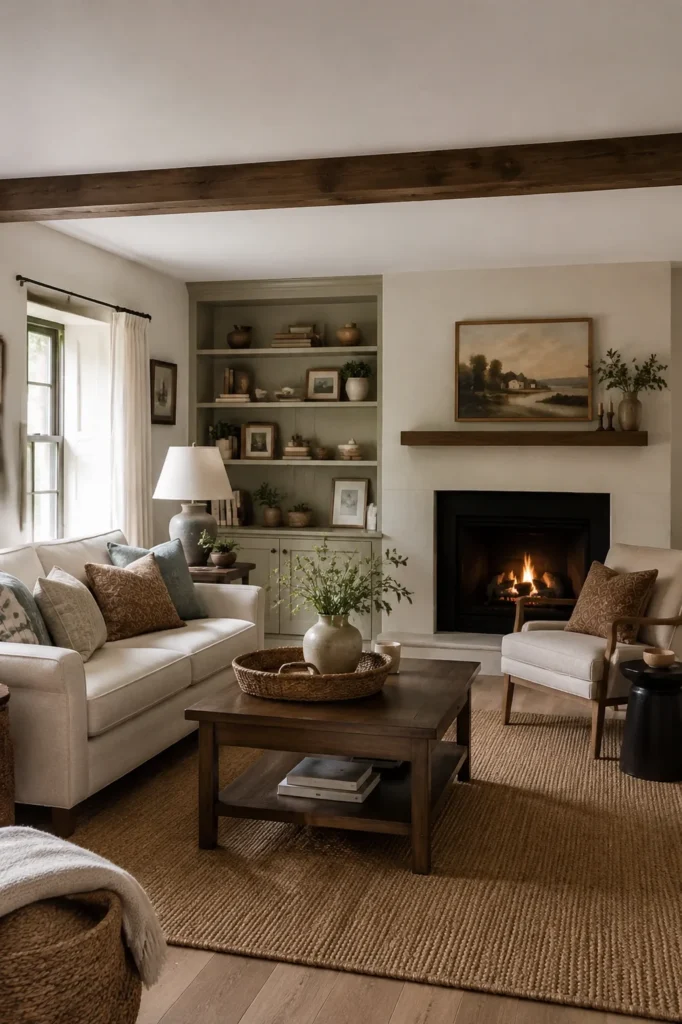
The Illusion: Every piece of furniture and decor scaled correctly for the room keeps the space feeling comfortable rather than overwhelmed by anything too large.
Installation Tip: Before buying anything new, measure the piece against the room’s actual dimensions, not just how it looks in a showroom with a much taller ceiling.
Styling Detail: When in doubt, size down, an undersized piece in a low room reads intentional, an oversized one reads cramped.
Quick Comparison and Budget Guide
| Decor Idea | Approx Cost | Effort Level | Visual Impact |
|---|---|---|---|
| Light Neutral Walls | $ ($30–$60) | A weekend | High |
| High and Wide Curtains | $ ($30–$70) | A few hours | High |
| Vertical Stripes | $$ ($40–$90) | A weekend | Medium |
| Low-Profile Furniture | $$$ ($400–$1,200) | Delivery | High |
| Ceiling One Shade Lighter | $ ($20–$40) | A few hours | High |
| Floor-to-Ceiling Shelving | $$$ ($200–$600) | A weekend | High |
| Large Mirror | $$ ($60–$200) | Under an hour | Medium |
| Recessed or Flush Lighting | $$$ ($150–$400) | Professional | High |
| Minimal Decor Edit | $ (Free–$40) | A few hours | Medium |
| Vertical Wall Art | $ ($30–$80) | Under an hour | Medium |
| Glass or Reflective Furniture | $$ ($100–$300) | Delivery | Medium |
| Smooth Ceiling Finish | $$ ($100–$400) | A weekend | Medium |
| Vertical Slat Accent Wall | $$$ ($200–$500) | A weekend | High |
| Simple Area Rug | $$ ($60–$180) | Under an hour | Low |
| Tall Slim Floor Lamps | $ ($40–$100) | Under an hour | Medium |
| Light, Airy Curtains | $ ($25–$60) | A few hours | Medium |
| Monochromatic Color Drenching | $$ ($60–$120) | A weekend | High |
| Built-In Furniture | $$$$ ($800–$3,000+) | Professional | High |
| Furniture with Visible Legs | Varies by piece | Delivery | Low |
| Ceiling-Edge LED Strip | $$ ($40–$100) | A few hours | Medium |
| Strategic Furniture Placement | Free | Under an hour | Medium |
| Proportional Scale | Varies | Planning only | Low |
Frequently Asked Questions
Can you use dark colors with low ceilings?
In small doses, yes. A dark accent wall low on the room, below a picture rail or wainscoting line, can work, but avoid dark color on the ceiling itself or across every wall, that combination is what makes a low room feel like it’s closing in.
What rugs work best in a low ceiling living room?
Simple patterns or subtle texture in a light to mid tone work best. Busy, high-contrast rug patterns compete with the vertical tricks happening on the walls and ceiling above them.
What are good ceiling fan alternatives for low ceilings?
Low-profile hugger-style ceiling fans mount nearly flush and work in rooms as short as 7.5 feet. If floor space allows, a slim tower fan or an oscillating pedestal fan skips the ceiling clearance issue entirely.
Final Thoughts
A low ceiling doesn’t have to define how a living room feels. Light colors, vertical lines, and furniture that stays low to the ground do most of the real work, while flush lighting and correctly hung curtains handle the details most people get wrong on the first try. Apply even a handful of these ideas together, and a standard 8-foot room can feel just as open as one with several extra feet of height.